

Description
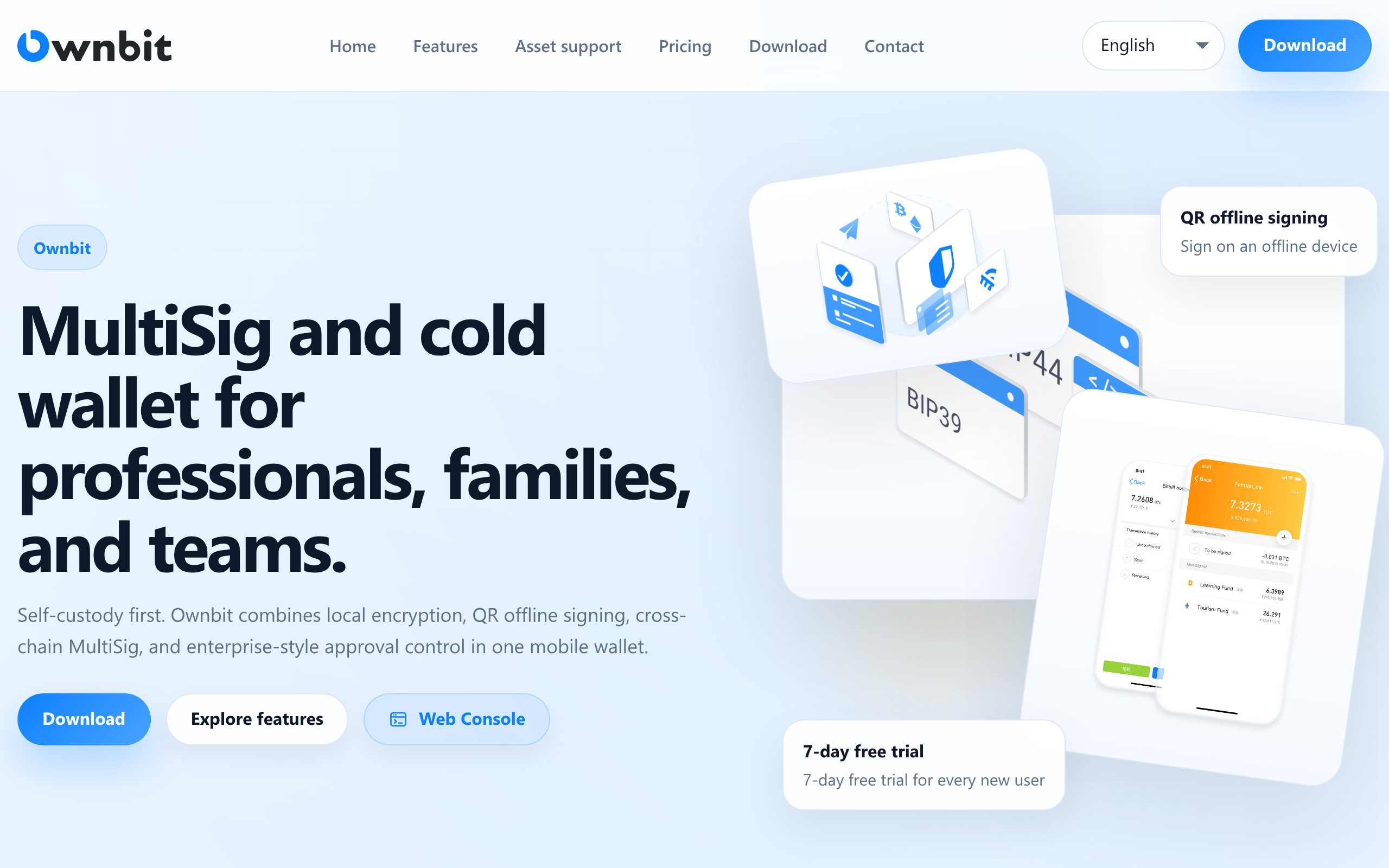
Ownbit is a self-custody mobile wallet that brings enterprise-grade security to individuals, families, and teams. It combines local encryption, QR offline signing, cross-chain MultiSig, and role-based approval control in one application.
Security by Design
- Mnemonic and seed data stored with enhanced local encryption on-device — never uploaded for remote custody
- BIP32, BIP39, and BIP44 compatible for predictable wallet generation and recovery
- Private keys derived only when signing is needed, minimizing exposure during normal use
- QR-based encrypted backup for secure migration and disaster recovery
Cold Wallet Workflow Turn any spare phone into an offline signer. Keep one device permanently air-gapped, prepare transactions on a Watch Wallet, and exchange only QR data between them — no extra hardware required.
MultiSig Governance
- 2-2 MultiSig — personal use, eliminates single point of failure
- x-3 MultiSig — family coordination, inheritance planning, shared funds
- x-4+ Enterprise MultiSig — team treasuries with roles, policies, and approval thresholds
Chain Coverage Bitcoin, Ethereum, BSC, Tron, Solana, Optimism, Arbitrum, Polygon, Ripple, Bitcoin Cash, Toncoin, Stacks, Litecoin, Dash, Filecoin, Cardano, Dogecoin, and Zcash.
Highlights
Pros
- Supports cross-chain MultiSig with 2-2, x-3, and x-4+ configurations featuring configurable roles, policies, and approval thresholds for personal, family, and enterprise use.
- Turns any spare phone into a hardware-wallet-grade cold signer using QR-only offline signing, eliminating the need for dedicated hardware wallets.
- Mnemonic and seed data remain encrypted and stored locally on-device with BIP32/BIP39/BIP44 compliance, never uploaded to remote servers for custody.
- Compatible with 18+ blockchains including Bitcoin, Ethereum, Solana, Tron, BSC, Polygon, Arbitrum, and Cardano, with cold wallet and MultiSig capabilities across the supported networks.
- MultiSig smart contract source code is publicly available on GitHub for community audit and transparency.
Cons
- Core wallet functionality is limited to iOS and Android mobile devices only, with no native desktop application for users who prefer keyboard-and-screen management.
- MultiSig recovery requires following a separate self-recovery guide rather than restoring from a standard seed phrase, adding complexity compared to single-sig wallets.
- Advanced wallet features require a paid membership ($59–$499/year) after the 7-day free trial expires, limiting functionality for users who do not subscribe.
- The cold wallet workflow requires two mobile devices to operate simultaneously, which may be impractical for users who own only one phone.
- Some App Store reviews have flagged the presence of suspicious or irrelevant reviews that do not relate to the wallet's functionality, raising questions about review authenticity.