

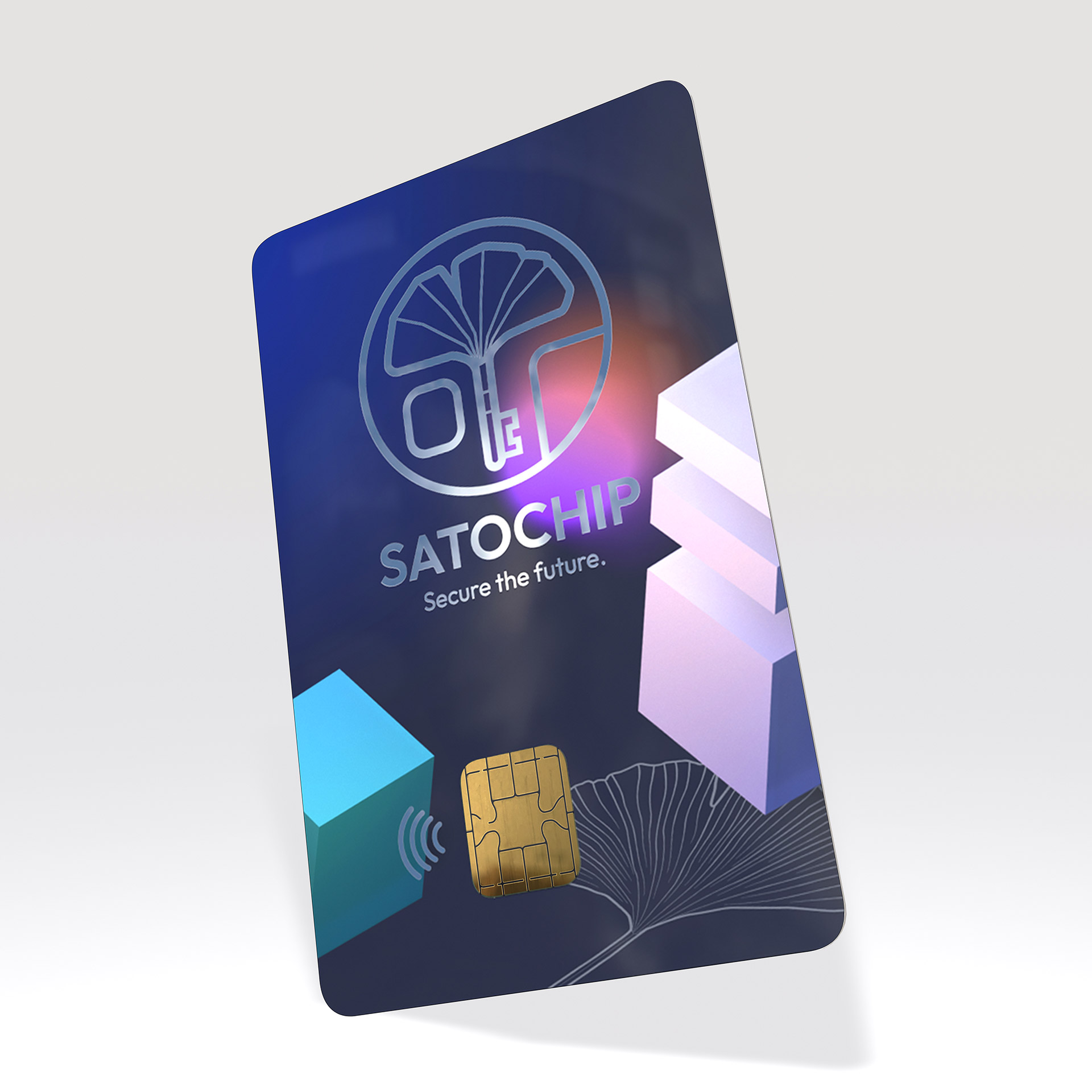
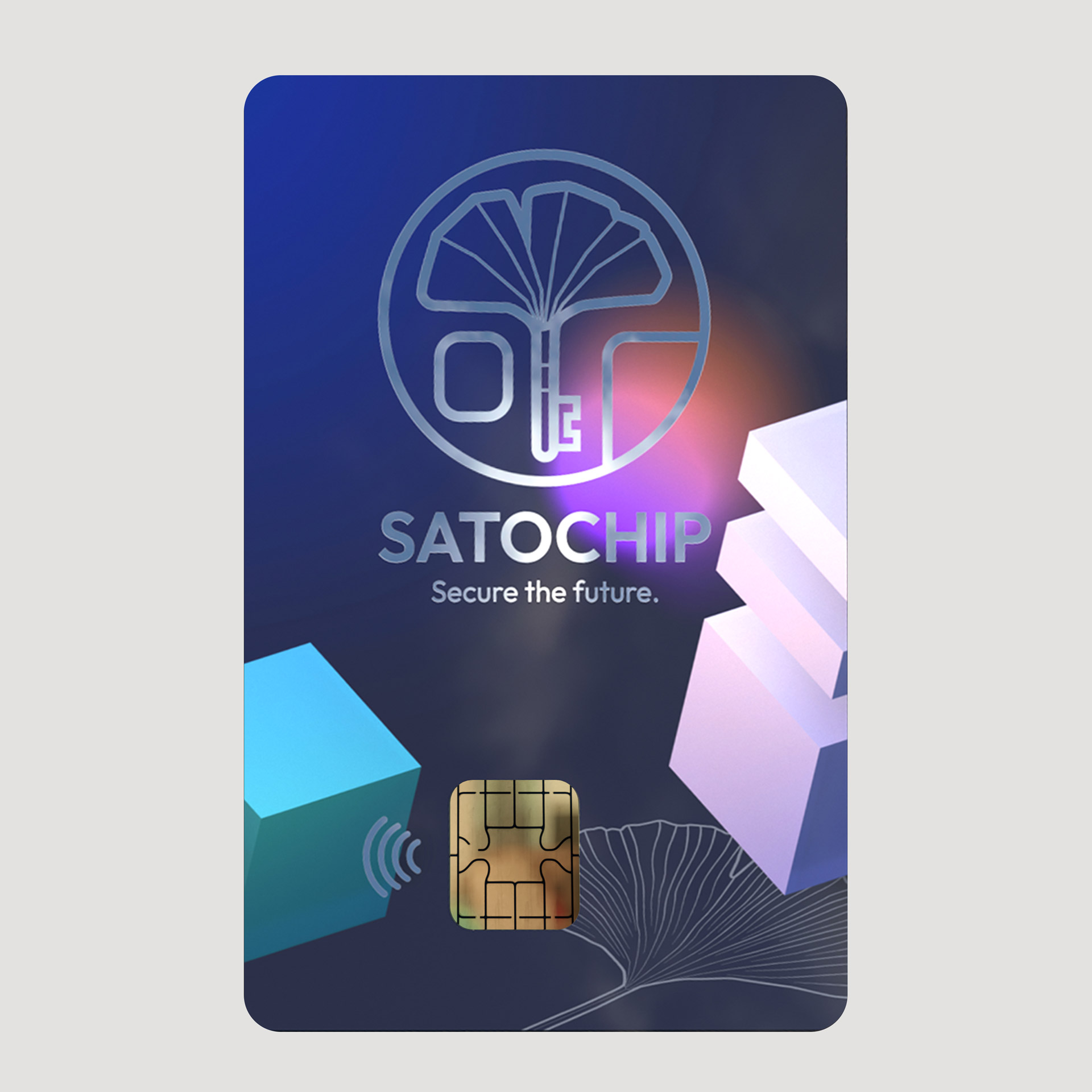
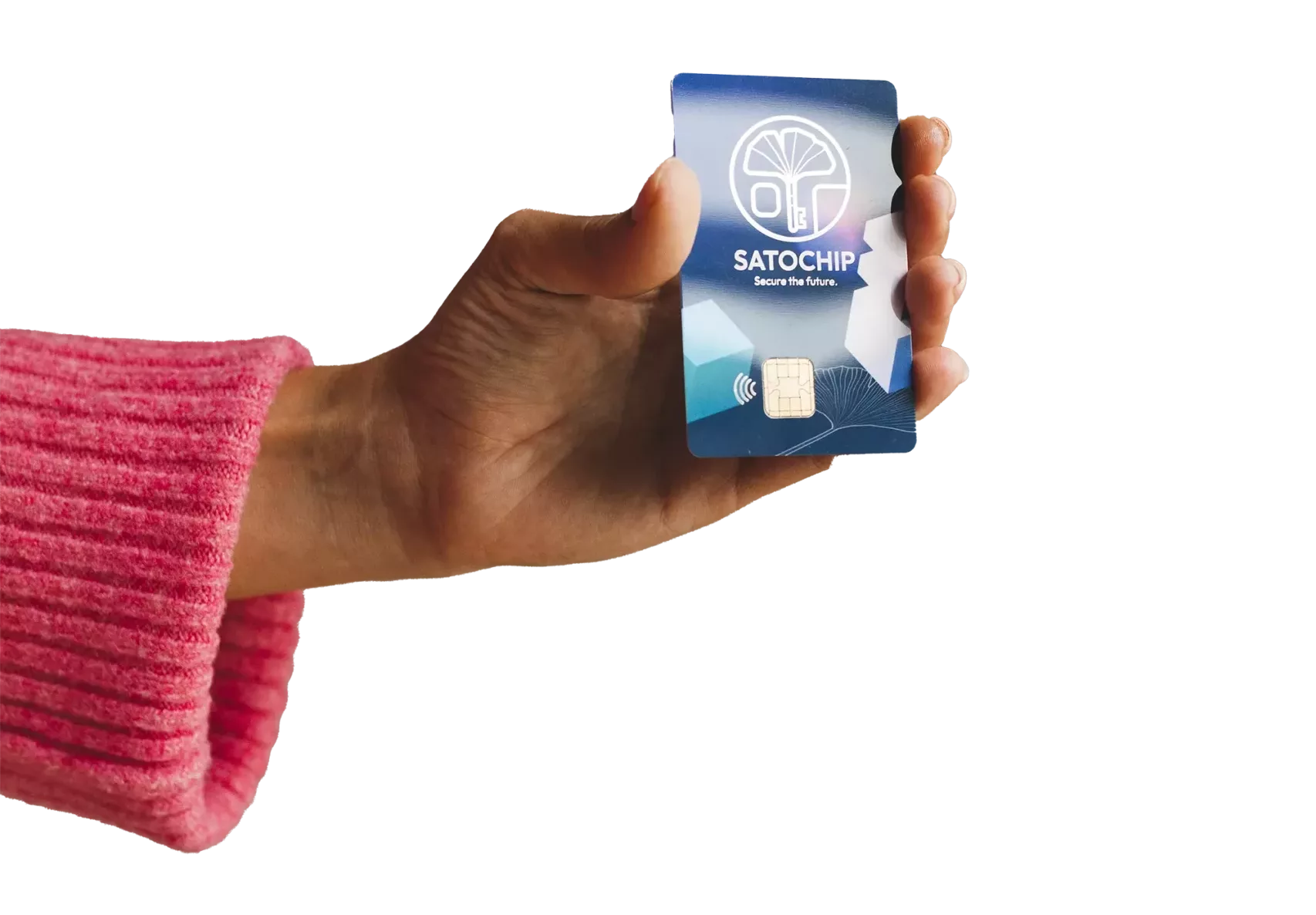
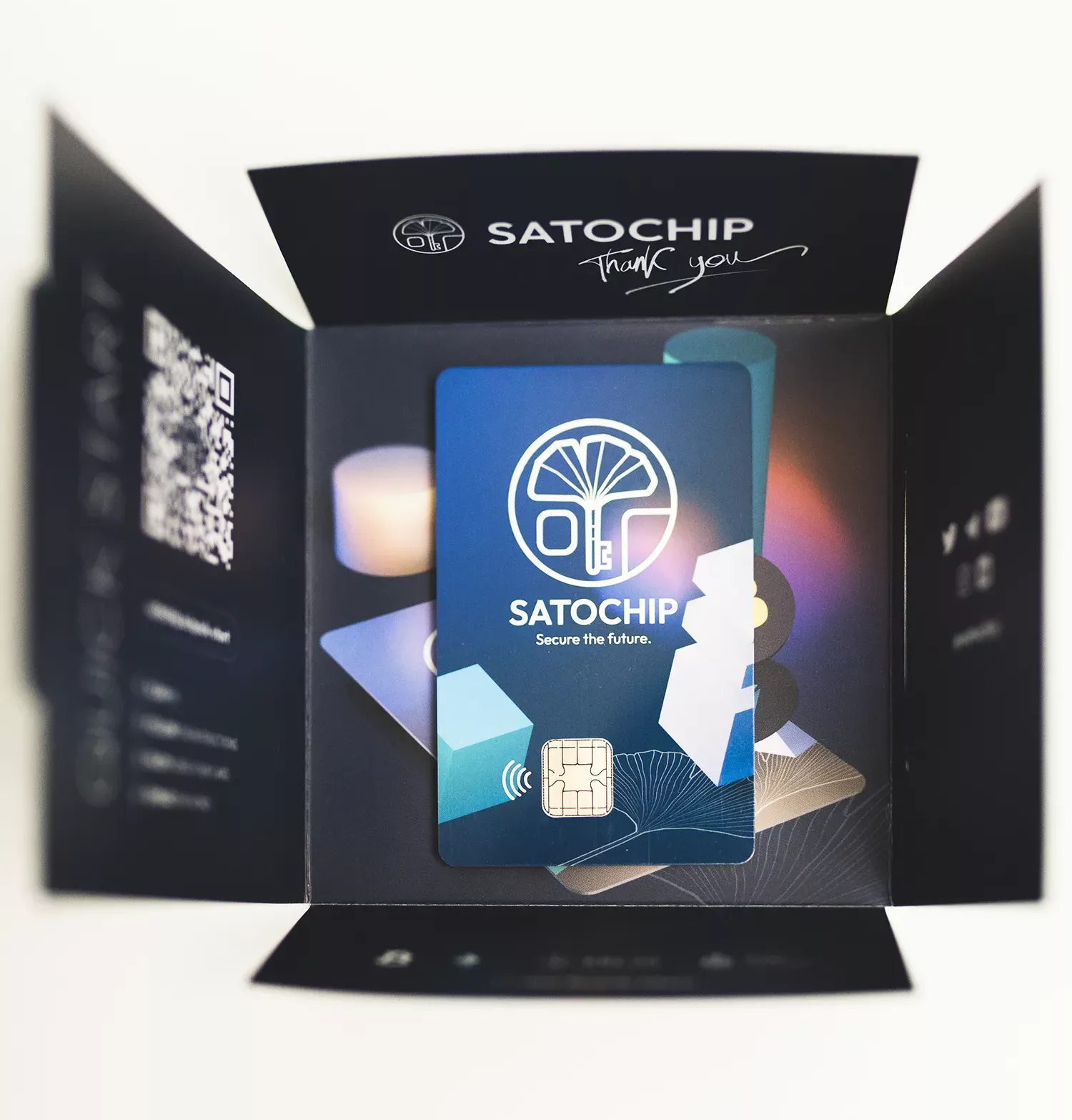

Satochip is a credit card-sized hardware wallet that uses an EAL6+ certified secure element chip to generate and store private keys offline. It connects via NFC (tap-to-sign on mobile) or through a chip card reader on desktop, offering a flexible, non-vendor-locked approach to self-custody.
Security
- EAL6+ Certified Secure Element — The embedded chip features a co-processor and tamper-proof memory. Private keys are generated inside the chip and can never be extracted.
- PIN Code Protection — Set a PIN of 4 to 16 characters. After several incorrect attempts, the card securely blocks access.
- 2FA Transaction Validation — Optionally add a second factor via mobile app to validate each transaction.
- Water & Shock Resistant — Durable construction designed to last.
- On-Card Authenticity Check — Each card includes a digital certificate verified with a trusted PKI to confirm it is genuine.
Supported Assets
Supports Bitcoin (BTC), Litecoin (LTC), Ethereum (ETH), Bitcoin Cash (BCH), Binance Smart Chain (BNB), and all ERC-20, BEP-20, and EVM-compatible tokens across networks including Polygon, Avalanche, Arbitrum, and Optimism. Also supports NFTs.
Connectivity & Software
- NFC — Tap the card to your NFC-enabled phone for mobile use.
- Chip Card Reader — Plug into any computer via USB smart card reader for desktop use.
- Open Source — Fully open source under AGPLv3. All code is publicly verifiable on GitHub.
- Compatible Clients — Works with Electrum, Sparrow Wallet, BitcoinKeeper, Uniblow, and WalletConnect for Web3 dApp access.
- Platforms — Available on Linux, macOS, Windows, iOS, and Android.
Setup & Backup
Each Satochip is delivered uninitialized. During first-time setup, the BIP39 seed phrase is displayed on screen and must be confirmed by the user. After initialization, the seed phrase can never be exported from the card, ensuring true self-custody.
Ideal For
Users looking for an affordable, portable NFC card wallet with bank-grade chip security — perfect as a daily carry signing device or a secondary cold wallet.
Pros
- Features an EAL6+ certified secure element with tamper-proof memory and a cryptographic co-processor, exceeding the security certification of most competing hardware wallets.
- Priced at just €25, it is one of the most affordable hardware wallets on the market while still providing robust cold storage security.
- Fully open-source under AGPLv3 license, with all code publicly available on GitHub for independent security auditing and community contributions.
- Credit-card-sized form factor (85.6×53.98mm, 10g) makes it highly portable, easy to conceal, and resistant to water and shock.
- Supports over 1,000 cryptocurrencies including Bitcoin, Ethereum, ERC-20 tokens, and BEP-20 assets through integration with Sparrow Wallet, Electrum, MyEtherWallet, and the Satomask browser extension.
- No vendor lock-in — compatible with multiple third-party software wallets and fully compliant with BIP32/BIP39 standards, allowing seed recovery on any compatible device.
Cons
- NFC connectivity is limited to mobile devices with NFC support, and not all third-party wallet apps have full Satochip compatibility.
- Lacks a built-in screen, so transaction details cannot be verified directly on the device and must be confirmed on the connected computer or phone.
- Requires a separate smart card reader (€19.99) for desktop use, adding cost and an extra accessory to carry — it is not a standalone USB device.
- Cannot be used as a physical payment card at stores despite resembling a bank card — it functions solely as a cryptocurrency hardware wallet.
- Smaller brand and ecosystem compared to Ledger and Trezor, resulting in fewer native integrations and a smaller community for support and development.
- Setup process is less intuitive than plug-and-play hardware wallets, requiring installation of specific software clients and a card reader or NFC-compatible phone.