

Description
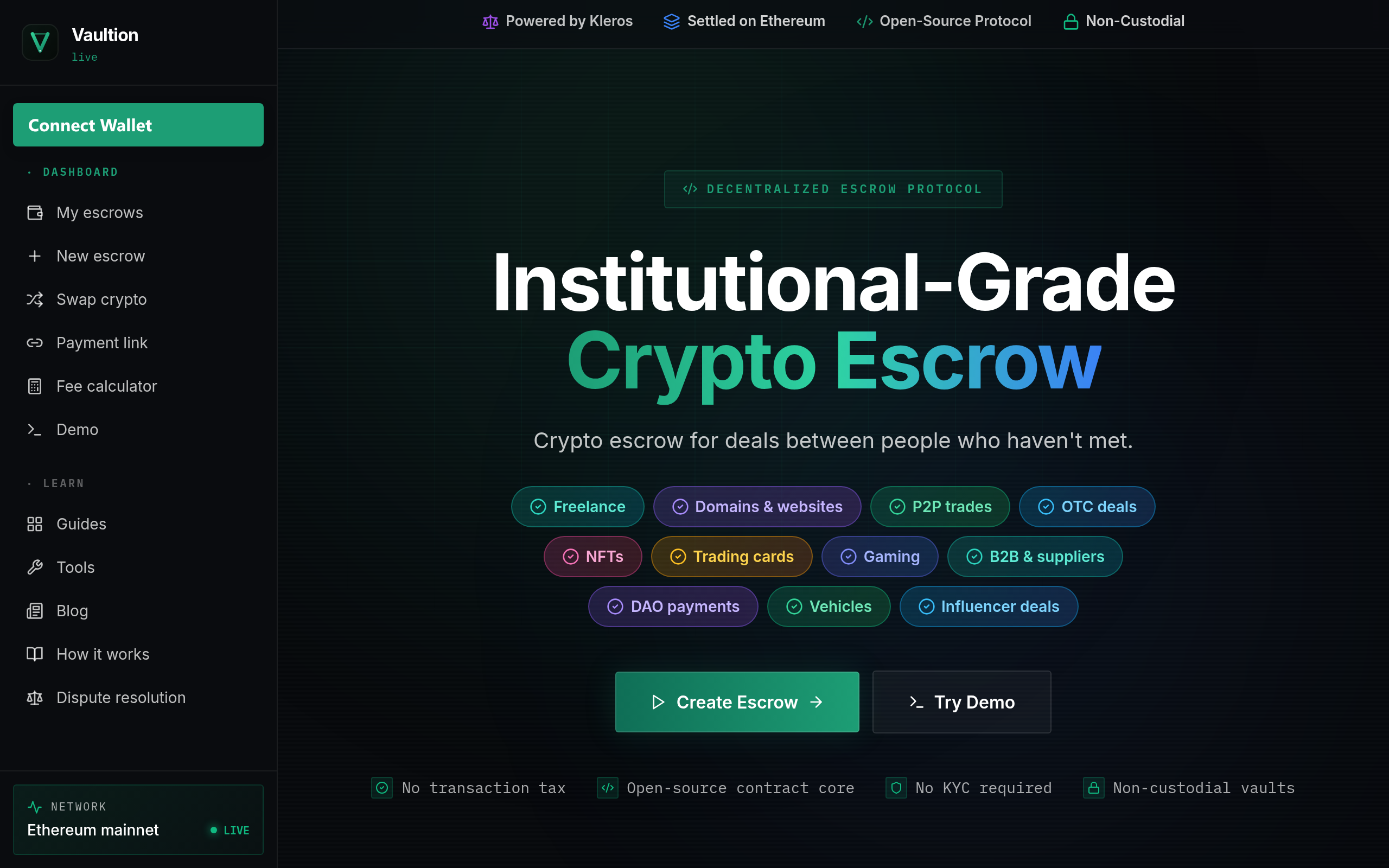
Vaultion is a decentralized, non-custodial escrow protocol that brings institutional-grade security to peer-to-peer crypto transactions. Built on Ethereum and powered by Kleros arbitration, it replaces trust in the counterparty with trust in open-source smart contracts.
How It Works
Vaultion follows a simple 4-step flow:
- Lock Funds — The buyer commits tokens (USDC, USDT, DAI, PYUSD) to an on-chain vault. The seller sees the confirmed balance before starting work.
- Inspect Delivery — A protected review window lets the buyer verify deliverables against agreed contract terms before signing off.
- One-Click Payout — The buyer approves release; the platform fee routes automatically and the remainder transfers to the seller.
- Dispute Resolution — If there's a disagreement, the case escalates to Kleros, where independent staked jurors review evidence and the contract executes the verdict.
Key Features
- Non-Custodial — Funds are held in audited, open-source smart contracts on Ethereum; Vaultion never touches your money.
- No KYC Required — Anyone with a wallet can create or participate in an escrow.
- Stablecoin Support — USDC, USDT, DAI, and PYUSD with no slippage or volatility while funds sit in escrow.
- Open-Source Core — Built on Kleros's independently-reviewed escrow contract code — verified on Etherscan.
- Deploy in Under 2 Minutes — Create an escrow quickly with no technical setup.
- Payment Links — Generate shareable links that pre-fill escrow terms for your buyer.
Use Cases
Freelance payments, domain & website sales, P2P trades, OTC deals, NFT transactions, trading cards, gaming, B2B supplier payments, DAO payments, vehicles, and influencer deals.
Highlights
Pros
- Non-custodial architecture — funds lock in open-source smart contracts on Ethereum mainnet that Vaultion cannot access or move, verifiable on Etherscan.
- No KYC or sign-up required — anyone with a crypto wallet can create or participate in an escrow without submitting personal identity documents.
- Built-in timeout protection automatically releases funds to the seller or refunds the buyer if one party goes silent, preventing permanently locked funds.
- Escrow creation takes under 2 minutes with shareable payment links that pre-fill deal terms — no technical setup or website needed.
- Supports USDC, USDT, DAI, and PYUSD stablecoins eliminating price volatility risk while funds are locked in escrow.
- Powered by Kleros decentralized arbitration where independent staked jurors resolve disputes on-chain, removing the need for a centralized middleman or trust in the counterparty.
Cons
- Not a regulated financial institution — Vaultion explicitly states it is not a bank, broker, or money transmitter, placing full recourse reliance on smart contract code and Kleros arbitration.
- New project with no publicly available third-party reviews, user testimonials, or established track record from external sources.
- Limited to stablecoins only (USDC, USDT, DAI, PYUSD) with no support for native ETH, BTC, or other volatile crypto assets as escrow funds.
- Dispute resolution depends entirely on the Kleros ecosystem — any disruption, flaw, or attack on Kleros arbitration directly impacts Vaultion's ability to resolve disagreements.
- Users must hold ETH to pay gas fees for creating, settling, or disputing escrows — an extra friction point for non-ETH holders.
- Only available on Ethereum mainnet — no support for lower-fee chains like Polygon, Arbitrum, or Optimism, exposing users to potentially high gas costs.